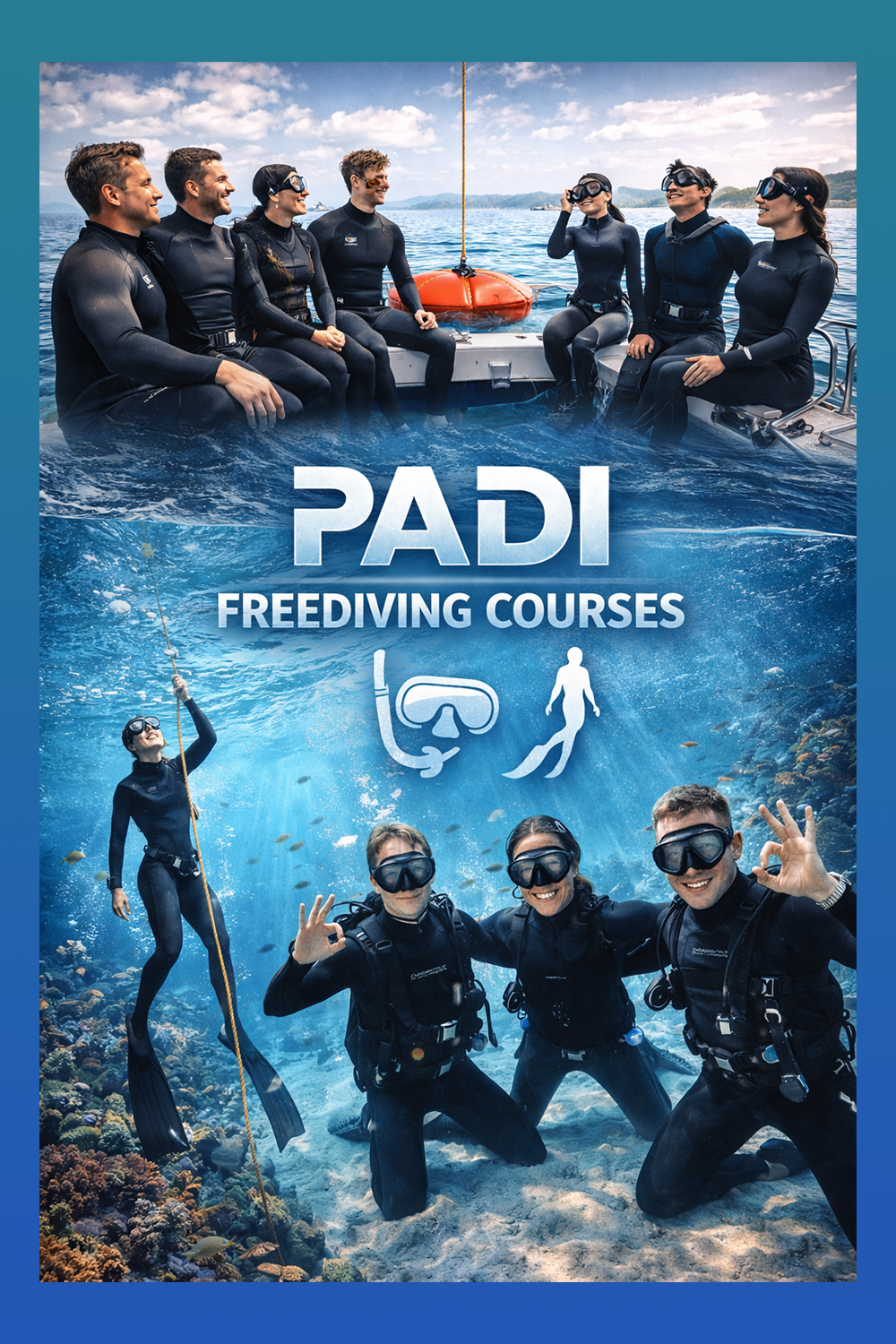
Recreational PADI Freediving Courses
Freediving is one of the purest ways to explore the underwater world—relying on breath control, relaxation, and connection with the ocean. The recreational freediving programs developed by Professional Association of Diving Instructors (PADI) are designed to help students safely learn the fundamentals of breath-hold diving while progressively improving their skills and confidence in the water.
Through structured training, practical exercises, and open water sessions, these courses teach essential techniques such as breathing control, finning efficiency, safety procedures, and underwater awareness. Whether you are discovering freediving for the first time or looking to improve your performance, PADI freediving courses provide a safe and progressive path to explore the ocean on a single breath.
- PADI Courses for Kids and Juniors
- PADI Freediving Programs and Experiences
- PADI Basic Freediver Junior
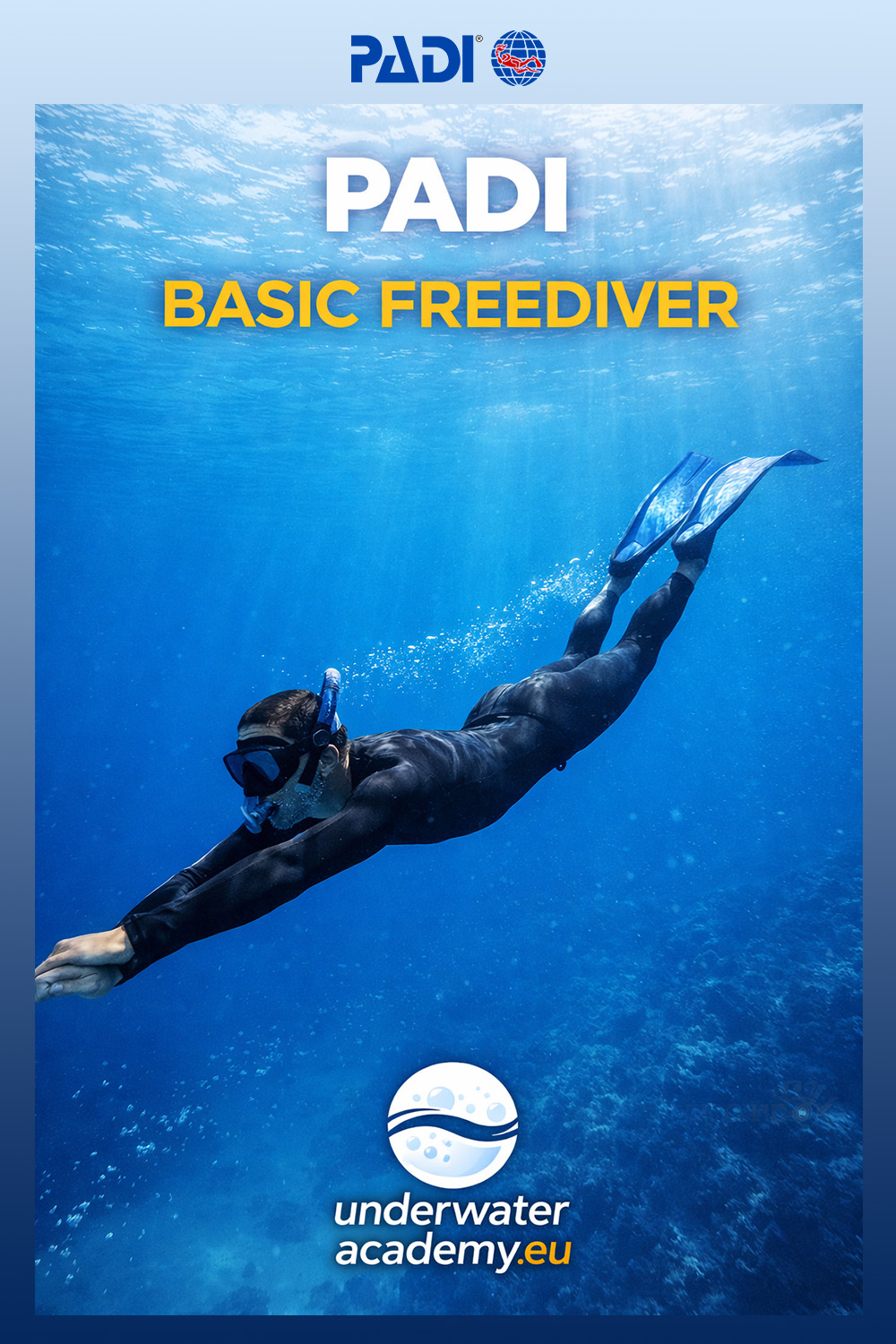
- PADI Basic Freediver
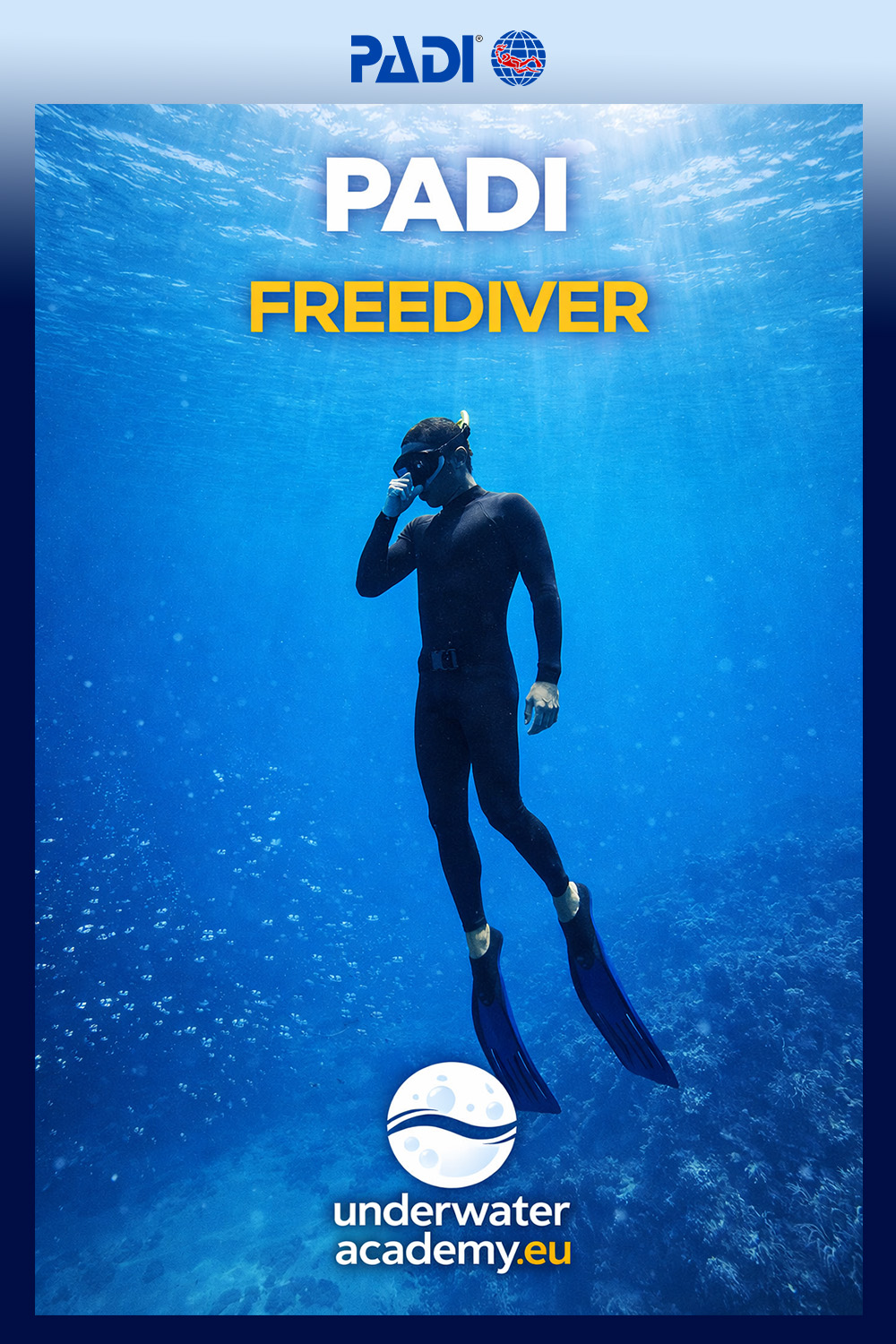
- PADI Freediver
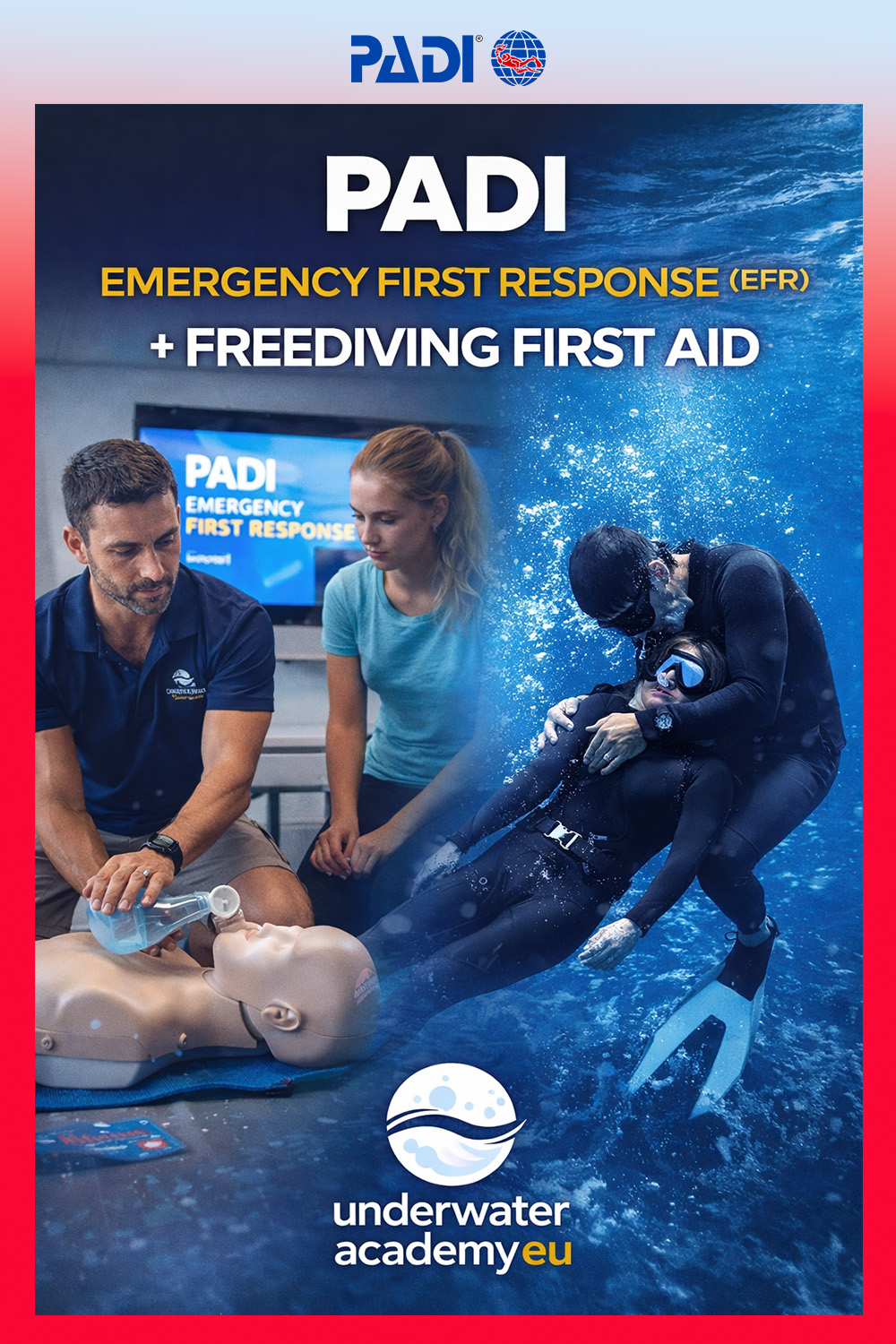
- PADI Emergency First Response (EFR) + Freediving First Aid
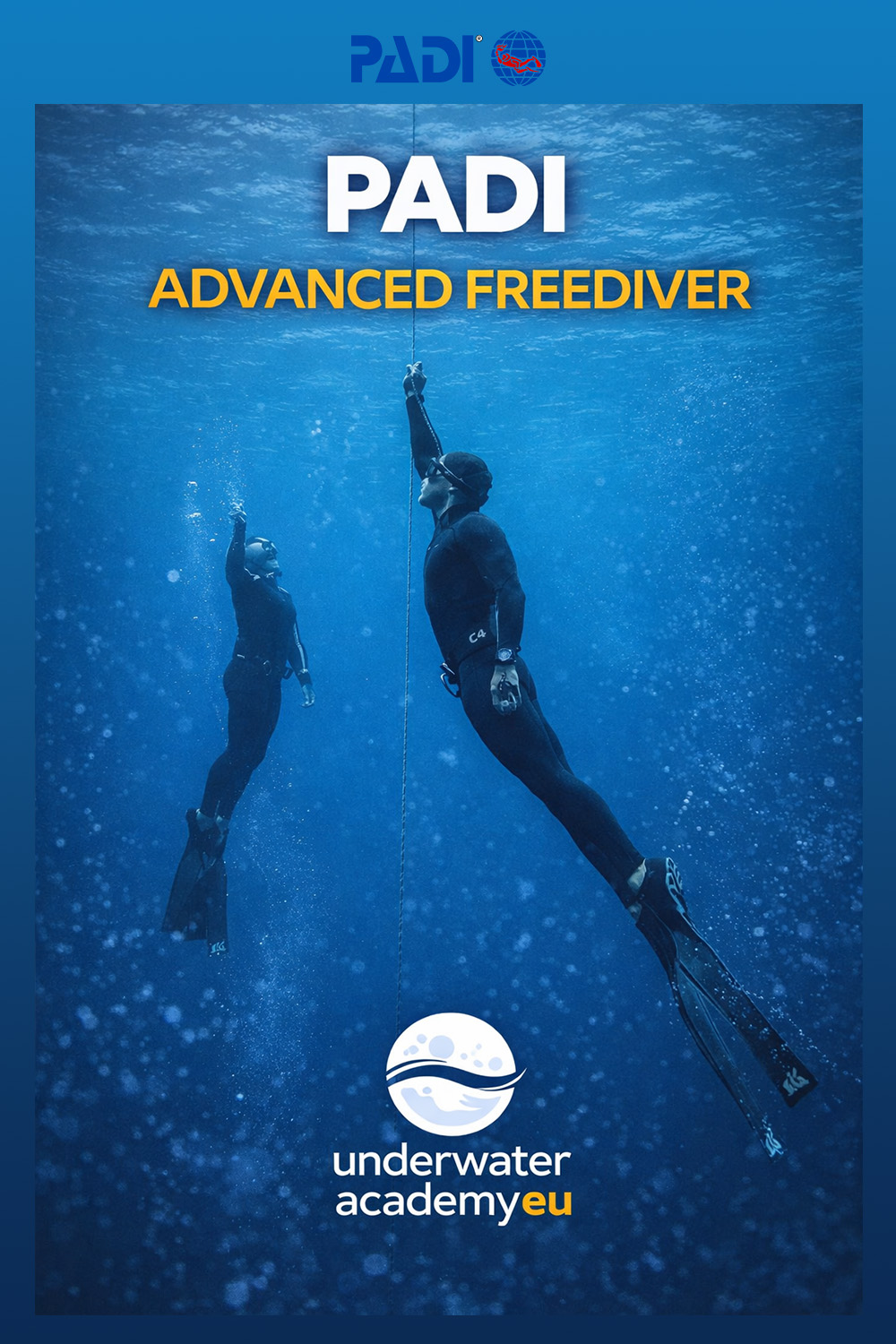
- PADI Advanced Freediver
No previous experience is required to start a beginner freediving course. Training begins with basic theory and breathing techniques before progressing to confined water and open water sessions. The program is designed to help students develop breath-hold skills safely and progressively.
Freediving requires specialized equipment such as a low-volume mask, snorkel, long fins or freediving fins, wetsuit, and weight belt. Because freediving equipment is highly personal and must fit correctly for comfort and safety, students are expected to use their own equipment.
If a student does not yet have personal equipment, Underwater Academy instructors will assist in selecting the most suitable equipment based on the student’s training level and experience.
The duration of a freediving course depends on the certification level and training schedule. Entry-level courses generally include theory sessions, breathing and relaxation techniques, confined water practice, and open water training dives. Courses can often be completed over several days depending on conditions and scheduling.
Freediving is safe when practiced with proper training, correct techniques, and appropriate supervision. Courses based on the standards of Professional Association of Diving Instructors (PADI) teach essential safety procedures, buddy systems, and breathing techniques designed to minimize risks and ensure a controlled learning environment.
After successfully completing the course requirements, including theory, practical exercises, and open water sessions, students receive an internationally recognized freediving certification issued by Professional Association of Diving Instructors (PADI). This certification allows divers to continue training and safely practice freediving within the limits of their certification level.